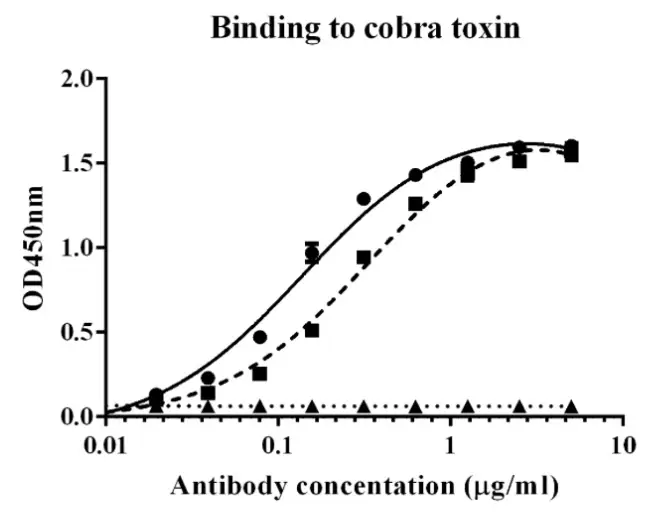
High Affinity and Specificity – Nanobodies® can bind their targets with very high affinity, often comparable to or even exceeding that of conventional antibodies. Their long CDR3 loops allow them to recognize unique or recessed epitopes with remarkable precision, making them powerful tools for neutralizing toxins or targeting disease-related proteins
Exceptional Stability – Because of their compact, single-domain structure, nanobodies remain stable under extreme conditions such as heat, pH changes, and protease-rich environments. This resilience makes them well suited for therapeutic use, diagnostic assays, and field applications where conventional antibodies would rapidly degrade.
Ease of Engineering – Nanobodies® are easy to genetically modify, fuse to other proteins, or reformat into multivalent and bispecific constructs. Their small size and simple architecture facilitate cost-effective production in microbial or plant systems, enabling rapid development of customized therapeutic and diagnostic agents.
Small Size – Nanobodies® are about one-tenth the size of a conventional antibody, allowing them to penetrate tissues efficiently and access hidden epitopes. This small footprint also improves their pharmacokinetics when engineered into multivalent or Fc-fused formats.
High Solubility – Their single-domain structure makes them highly soluble, reducing aggregation and simplifying formulation compared to full-sized antibodies. This property also enables high expression yields in microbial and plant systems.
Rapid Tissue Penetration – Because of their small size and stability, nanobodies can cross biological barriers and distribute quickly into tissues. This makes them attractive for applications in oncology, neurology, and infectious disease therapy.
Versatile Formatting – They can be easily linked into multivalent, bispecific, or fusion proteins with enzymes, toxins, or Fc domains. This flexibility allows for customized applications, from drug delivery to targeted imaging.